
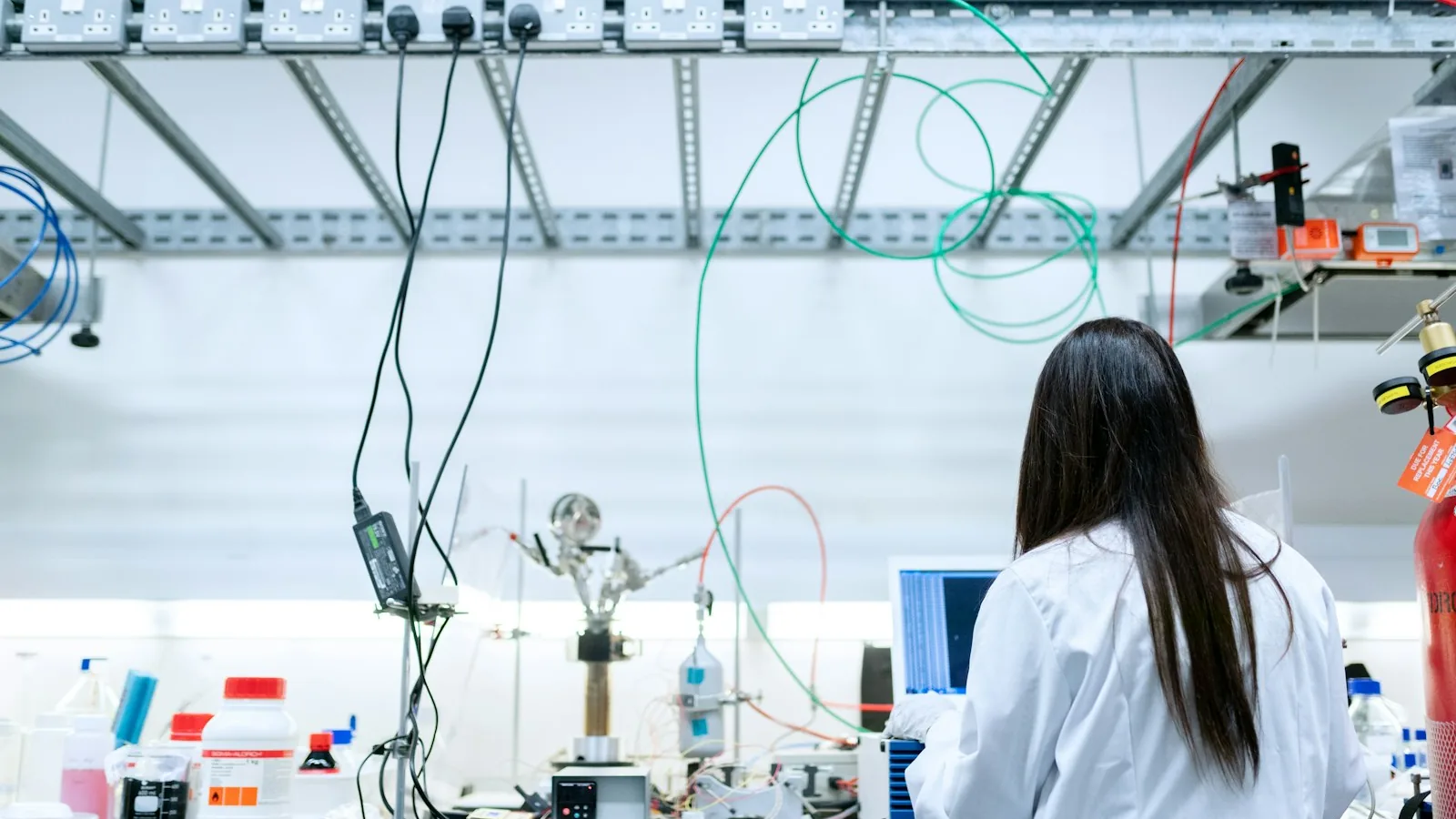
There is no best answer here, which is why the argument recurs in every lab every couple of years. There are four common options, each genuinely good at something, and each with a failure mode that its advocates tend not to mention.
The paper notebook
Good at: writing anything, in any shape, instantly, with no software between you and the thought. Sketches, arrows, a smear of something, a note in the margin. Nothing else comes close for capture speed, and for a legally-witnessed record it remains the default for good reason.
Fails at: finding anything later, and at existing in more than one place. A notebook is a write-optimised medium being used as a read-optimised one. Six months on, the question is never "did I write it down" — it is "which of these four notebooks, and roughly when".
The spreadsheet
Good at: anything that is a table. Sample lists, plate layouts, dilution series, counts across conditions. It calculates, it sorts, it plots, and everyone already knows how to use it.
Fails at: being a record of a process rather than a set of numbers. Spreadsheets have no natural place for "what happened", and they silently drift — a copied formula, an unversioned file called final_v3_REAL.xlsx, a column someone re-sorted without the others. The failure is quiet, which makes it worse than the notebook's.
The electronic lab notebook
Good at: exactly the thing the other two fail at — a searchable, timestamped, multi-user record with versioning and permissions. If you are in a regulated environment or a group of more than a handful of people, this is what the problem eventually demands.
Fails at: the bench. ELNs are almost always designed around the write-up, not around the twenty minutes when you have gloves on and one hand free. The common outcome is that people take notes somewhere else and transcribe them into the ELN later, which reintroduces every error the ELN was bought to prevent.
The task-specific app
Good at: one job, done at the bench, on a phone, with one hand. Counting colonies off a plate photo. Running four named timers. Scaling a master mix to 24 reactions. The value is that the output is correct and immediate rather than transcribed and approximate.
Fails at: being the whole record. A colony count is not an experiment; it is one number inside one. Anyone who tries to make a set of tools serve as the lab notebook ends up with the notebook problem again, scattered across more places.
What most working labs actually settle on
Not one of these, but a deliberate split: capture at the bench in whatever is fastest and correct, and consolidate afterwards into whatever is searchable. The mistake is not choosing the wrong tool. It is failing to decide which tool owns which job, so that the same information ends up in three of them, differently.
- Decide where a number is first written down, and never write it somewhere else first
- Decide what the searchable record is, and put everything there eventually
- Accept that the bench tool and the archive are different tools with different jobs